Published: May 7, 2026
Choosing the right material for an exterior facade is one of the most important decisions on a luxury residential or commercial project. Natural wood offers unmatched warmth and authenticity, but it also carries long-term maintenance, durability, and performance trade-offs—especially in coastal or humid climates. High-density polyurethane (PU) delivers a convincing wood look while addressing many of the practical limitations of timber. This article compares polyurethane facades and natural wood across durability, aesthetics, maintenance, cost, and environmental considerations so you can choose the best solution for your next high-end project.

Quick decision guide — 30 seconds
- Choose natural wood if authenticity and original grain are essential, and you accept regular maintenance and potential long-term costs.
- Choose polyurethane if you need wood-like appearance with minimal maintenance, high longevity, and lighter structural loads.
- Ideal hybrid: use real wood where small accents matter and PU for larger exterior cladding and decorative elements.
Why polyurethane is a practical alternative
Polyurethane facades are manufactured using precision molds to create highly detailed profiles and textures. High-density PU compounds are engineered for exterior use: they resist moisture, UV degradation, insects, and freeze-thaw cycles far better than untreated timber. In many facade applications PU can reproduce fine wood grain and complex moldings while offering a predictable performance profile that architects and project managers can rely on.
Durability & weather resistance
- Natural wood: Susceptible to moisture absorption, rot, fungal growth, and insect damage (termites, wood-boring beetles). Coastal salt air and humid climates accelerate degradation unless high-grade, treated, or exotic species are used. Wood expands and contracts with humidity and temperature changes; these movements can cause gaps, warping, and finish failure over time.
- Polyurethane: Does not absorb water, so it avoids swelling, warping, and freeze-thaw cracking. High-density PU retains detail and dimensional stability in wide temperature and humidity ranges. Proper topcoating protects against UV-induced discoloration; modern coatings can achieve long color retention and abrasion resistance.
Practical takeaway: For humid or coastal locations (e.g., Antalya or Gulf-region villas), PU significantly reduces long-term weather-related failure risk.
Aesthetics & finish
- Natural wood: Unbeatable for authentic grain, natural knots, and tactile warmth. It carries intrinsic luxury—especially on close-up elements and interior finishes. Some clients and architects will always prefer the “real thing.”
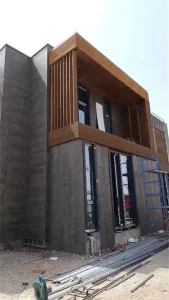
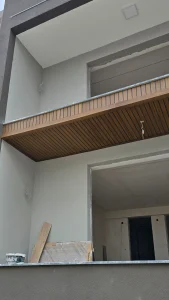
- Polyurethane: Advanced mold-making and finishing techniques can replicate many wood species, textures, and profiles at scale. PU is ideal for complex trims, repeating architectural elements, and large-format panels where consistent appearance and crisp detail are required. With correct finishing (stain, textured paints, or pigmented coatings) PU can convincingly mimic wood from a normal viewing distance.
Design recommendation: Use real wood for small, highly visible accents (door surrounds, interior wall panels), and polyurethane for large, repeating exterior elements that must remain consistent and durable.
Maintenance & lifecycle cost
- Natural wood: Ongoing maintenance is the primary cost driver—annual or biennial sanding, sealing, staining, or repainting to maintain appearance and prevent rot. Repairing rotten sections often requires localized replacement and careful color matching.
- Polyurethane: Minimal maintenance—periodic cleaning and inspection, with repainting or touch-ups typically required far less frequently (every 7–15 years depending on coating and exposure). Damaged elements can be replaced easily due to light weight and modular installation.
Total cost perspective: While premium wood species may have lower initial aesthetic cost for some applications, lifetime maintenance and replacement costs often make polyurethane the more cost-effective choice for exterior cladding.
Structural weight and installation speed
- Natural wood: Heavier for dense species and may require stronger anchoring systems and slightly higher labor for safe handling on tall facades. Installation can be slower if on-site cutting and finishing are required.
- Polyurethane: Extremely lightweight compared with wood of similar visual bulk—this reduces scaffold time, handling risk, and structural load. Panels and elements are installed faster, which shortens critical path on-site and lowers labor costs.
For large facades, the reduced installation time alone often justifies choosing PU.
Fire performance & regulations
Fire performance varies by product and finishing system. Many high-density PU products are formulated with fire-retardant additives and can achieve enhanced ratings, but local building codes and project specifications must be consulted. High-end projects in regulated markets often require specific testing and certification for external cladding—ensure the chosen PU product and coating meet relevant standards.
Environmental considerations
- Natural wood: Renewable when sourced from certified forests (FSC). However, environmental impact depends heavily on species, transport footprint, and treatments (preservatives, stains). Real wood can be reclaimed or recycled in some cases.
- Polyurethane: A petrochemical product whose environmental profile depends on formulation and end‑of‑life handling. Some modern PU manufacturers offer recyclable formulations or take-back programs; lifecycle assessments vary. When considering embodied carbon, factor in transport, frequency of replacement, and maintenance cycles—lower maintenance and longer life can improve the net environmental picture for PU.
Best-fit project types
- Choose polyurethane when: you need large, repeatable decorative elements; are working in harsh climates; want sharp detailing and quicker schedule; or need to reduce structural load. Typical projects: luxury hotels, villas in coastal regions, restoration work requiring lightweight replicas.
- Choose natural wood when: close-up, tactile authenticity is critical; the climate is stable and maintenance is planned; and the client values traditional material authenticity. Typical projects: boutique interiors, small façade accents, heritage restorations where original material must be preserved.



Short technical comparison (at-a-glance)
- Moisture resistance: PU — High / Natural wood — Variable
- Maintenance frequency: PU — Low / Natural wood — High
- Weight: PU — Low / Natural wood — Medium–High
- Detail fidelity: PU — Very high (molded) / Natural wood — High (authentic)
- Initial material cost: PU — Medium / Natural wood — Low–High (species dependent)
- Lifetime cost: PU — Low–Medium / Natural wood — Medium–High
FAQ (short)
- Q: Can polyurethane really mimic authentic wood?
A: Yes—precision molds and textured finishes reproduce grain and profiles convincingly, particularly at typical facade viewing distances. - Q: How long does a PU facade last outside?
A: High-density formulations with quality coatings can last decades with minimal maintenance; exact lifetime depends on exposure and coating system. - Q: Is PU recyclable?
A: Some manufacturers now offer recyclable or take-back programs; ask your supplier for specific end-of-life options and LCAs.